

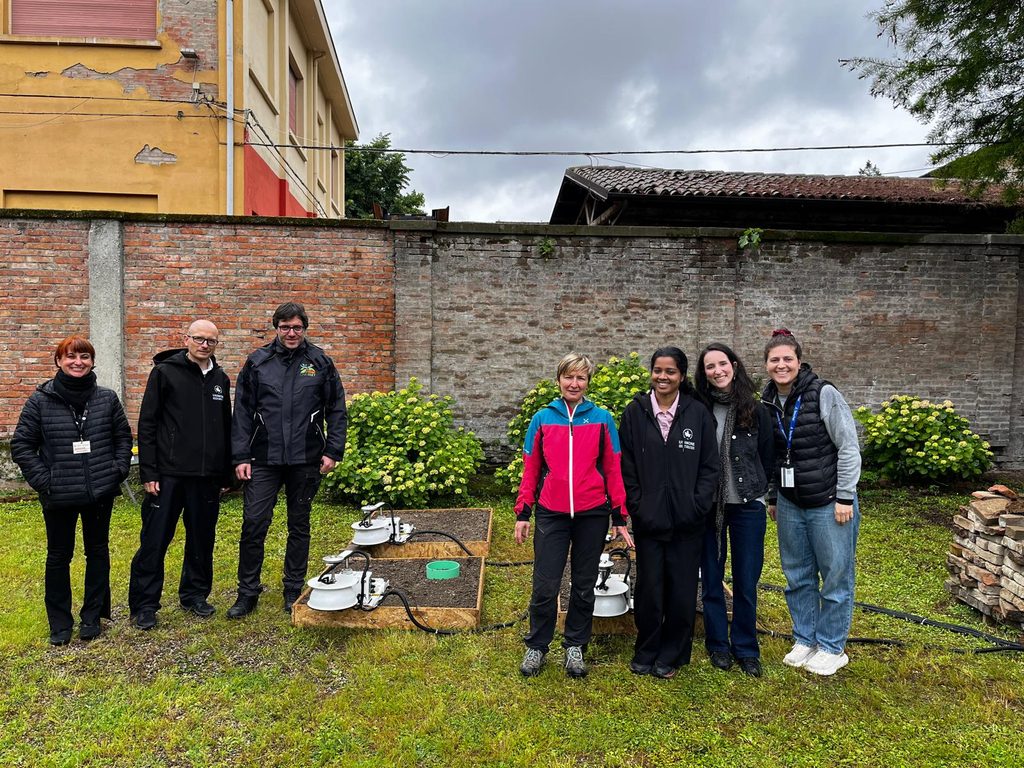
Cities are at the centre of two major environmental challenges.
On one hand, they are responsible for a large share of global carbon dioxide (CO₂) emissions. On the other, they are among the main sources of microplastic pollution, with particles originating from road traffic, tyre wear, textiles and other urban activities continuously accumulating in soils, vegetation and the atmosphere.
While these two issues have been widely studied separately, very little is known about how they interact.
MICE² (Microplastic Impact on Carbon Exchange by City Ecosystems) was created to bridge this knowledge gap by investigating whether microplastic pollution can alter the way urban ecosystems exchange carbon with the atmosphere.
The project combines expertise in environmental engineering, ecology and atmospheric sciences to understand how soil contamination may influence ecosystem respiration, vegetation processes and ultimately the urban carbon cycle.
Why does it matter?
Urban green spaces play a crucial role in improving environmental quality. Besides providing recreational areas and supporting biodiversity, they absorb and release carbon dioxide through natural biological processes.
At the same time, urban soils are increasingly exposed to microplastic contamination. Recent studies suggest that microplastics may modify soil structure, microbial communities and biological activity, potentially affecting ecosystem functioning.
Understanding these processes is essential for improving estimates of urban carbon budgets and for supporting more effective climate mitigation and adaptation strategies.
Why Modena?
Modena provides an exceptional natural laboratory for this research.
The city combines several unique scientific infrastructures and long-term monitoring activities, including:
- the UNIMORE Geophysical Observatory, where continuous Eddy Covariance measurements of urban CO₂ fluxes are performed;
- the UNIMORE Botanical Garden, which hosts ecological experiments and environmental monitoring activities;
- existing datasets on airborne microplastic deposition;
- advanced atmospheric and ecosystem modelling tools developed within previous research projects.
The integration of these resources allows MICE² to investigate the relationships between microplastic pollution and ecosystem carbon exchange at an urban scale.